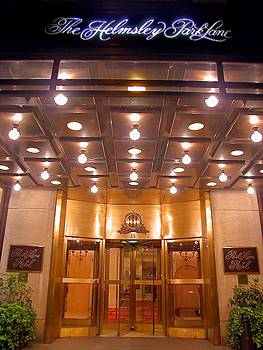
9/18/08 UpdateWinner of committee counsel beauty pageant announced here (drumroll please).

             *                              *                              *

Following up from yesterday’s post, many are searching for a list of the creditors appointed to the Lehman Creditors’ Committee.  The US Trustee has just filed this notice identifying the following seven creditors that have been appointed to the Committee:

  • Wilmington Trust, as Indenture Trustee (Not Listed in Voluntary Petition)
  • The Bank of NY Mellon, as Indenture Trustee ($155 Billion in Bond Debt)
  • Shinsei Bank, Ltd. ($231 Million in Bank Debt )
  • Mizuho Corporate Bank, Ltd.  as Agent ($289 Million in Bank Debt)
  • The Royal Bank of Scotland, PLC (Not Listed in Voluntary Petition)
  • Metlife (Not Listed in Voluntary Petition)
  • RR Donnelley & Sons (Not Listed in Voluntary Petition)

With all the late nights at Lehman, I’m surprised the coffee vendor isn’t on the list.

It doesn’t appear that the Committee has selected counsel, which isn’t surprising given how late the meeting went last night, according to this news report.

9/17/08 UpdateFollow up post on today’s events here.

© Steve Jakubowski 2008

9/17/08 UpdateSee this post on the US Trustee’s selection of Committee members and this post on Lehman’s motions for DIP Financing and for the sale of its broker-dealer subsidiary to Barclays.

             *                         *                         *

Following up on yesterday’s post

The case has been assigned to Judge James M. Peck (author of this important decision in the long-running Iridium litigation), who in 2006 adopted a lifestyle change in ascending to the bench and walking away from Schulte Roth & Zabel’s highly regarded bankruptcy group, where he was co-chair.  Here’s the latest docket showing no new filings other than routine appearances by interested parties.  Here’s the voluntary petition, showing the top thirty unsecured creditors at the holding company level range from an aggregate $155 billion in bond debt to about $3 billion in aggregate bank debt.

Meanwhile, according to this notice from the US Trustee’s office, the organizational meeting of unsecured creditors is set for 6:00 p.m. on September 16 at the Helmsley Park Lane Hotel.  The purpose of the meeting is to form a creditors’ committee, which will bestow upon one lucky firm one of bankruptcy’s most coveted prizes–the role of committee counsel.  Those wanting a sense of what these events are like should read Peter Lattman’s rundown of the Calpine "beauty pageant."  I suppose you could say it’s a place where counsel puts lipstick on a pig (i.e., the debtor) in hopes of having committee members believe that counsel is best suited to maximize value for the benefit of creditors. 

You can bet counsel will review with Committee members the whopping $5.7 billion in Christmas bonuses that were approved by this board and paid for management’s stellar performance in [not taking the writedowns that may have impaired their bonuses in] 2007.  For more insight into this issue, see Professor Adam Levitin’s recent post on the Credit Slips Blog.

Finally, special thanks to Dan Slater of the WSJ Law Blog, Francis Pileggi of the Delaware Corporate and Commercial Litigation Blog, and Kevin LaCroix of The D & O Diary for their kind links that helped set this blog’s record-breaking numbers for the day (3,435 page views from 1,643 unique sites).

Good luck to all!  We sure need it!

© Steve Jakubowski 2008

(9/16/08 Update Here)

In most endeavors, it’s important to start off on the right foot.  I don’t think you’d call the Lehman bankruptcy filing today one such start.  A well-planned bankruptcy case is orchestrated so that the early days of the case represent a seamless flow between the pre- and post-bankruptcy world.   Calpine’s "first-day pleadings" (discussed at length here) reflected the kind of significant planning that would avoid a financial meltdown of the firm.

By contrast, Lehman Brothers Holdings, Inc.’s chapter 11 filing early this morning (docket here / petition here) shows that Lehman’s executives must have hired Weil Gotshal as late as possible to avoid any hint to its employees or the market that bankruptcy was possible.  It played chicken, and lost.  Lehman filed only three motions to open the case, and none are substantive: 

  • this motion asks the Court to enforce the automatic stay provisions of Code Section 362 (and is in itself a curious motion since the law in the 2nd Circuit is that all actions in violation of the automatic stay are void, not voidable);
  • this motion asks the Court to extend the time to file required lists and schedules; and
  • this motion asks the Court to waive the requirement that a filing include a list of creditors. 

Like Drexel before it, only the holding company filed, so it will be "business as usual" for all of Lehman Holdings’ subsidiaries, none of whose activities are directly subject to the protections of the automatic stay or the Bankruptcy Code and Court generally (SIPC confirmation here).

Maybe, in the end, preparation of a well-executed contingency plan wouldn’t have mattered much since, in BAPCPA, Congress (as discussed at length here) amended or added various provisions to the Bankruptcy Code that enabled a nondebtor party–without limitation–to terminate, liquidate or accelerate its securities contracts, commodity contracts, forward contracts, repurchase agreements, swap agreements or master netting agreements with the debtor.  As noted in my previous post on BAPCPA’s effectively excluding Wall Street’s financial firms from the benefits of bankruptcy, Columbia Law professor Edward Morrison, with Columbia GSB economics legend Franklin Edwards, argued in a Winter 2005 article entitled Derivatives and the Bankruptcy Code: Why the Special Treatment? that BAPCPA’s extension of the Code’s protections for the financial services industry "to include a broader array of financial contracts, all in the name of reducing systemic risk … is a mistake."  They argued that "[a] better, efficiency-based reason for treating derivatives contracts differently arises naturally from the economic theory underlying the automatic stay [i.e., derivative contracts are rarely needed to preserve a firm’s going-concern surplus]."  Still, they warn (at pp.1, 4-5):

Continue Reading Free Fall: Lehman Enters Chapter 11

Here are some general bankruptcy related articles of interest that are available for downloading from SSRN.  Their abstracted summaries follow:

***

UNLV’s Nancy B. Rapoport and Forensics Consulting Solutions’ Roland J. Bernier III, "(Almost) Everything We Learned about Pleasing Bankruptcy Judges, We Learned in Kindergarten" (Abstract ID: 1157103)

***

Stetson University’s Michael S. Finch, "Giving Full Faith and Credit to Punitive Damage Awards: Will Florida Rule the Nation?" (Abstract ID: 1143578)

***

Stetson University’s Theresa J. Pulley Radwan, "Trustees in Trouble: Holding Bankruptcy Trustees Personally Liable for Professional Negligence"
(Abstract ID: 1138069)

***

Stetson University’s Theresa J. Pulley Radwan, "Limitations on Assumption and Assignment of Executory Contracts by ‘Applicable Law’"
(Abstract ID: 1138056)

***

Temple University’s S. Todd Brown, "Non-Pecuniary Interests and the Injudicious Limits of Appellate Standing in Bankruptcy"
(Abstract ID: 1114917)

***

Santa Clara University’s Alexander J. Field, "Bankruptcy, Debt, and the Macroeconomy, 1919-1946" (Abstract ID: 1109259)

***

UNLV’s Tuan Samahon, "Are Bankruptcy Judges Unconstitutional? An Appointments Clause Challenge" (Abstract ID: 1108694)

***

Univ. of Chicago’s Randall C. Picker, "’Twombly’, ‘Leegin’ and the Reshaping of Antitrust", (Abstract ID: 1091498)

***

Abstract summaries for each of the foregoing articles follow below:


Continue Reading Recent Bankruptcy-Related Articles of Interest Available for Downloading from SSRN

[6/19/08 Update:  The issues raised by this case are fully explored in connection with my filed objection to the GM 363 Sale on behalf of certain products liability claimants, discussed here.]

I decided to do some digging after reading of last week’s tragic story about the four-month old infant strangled to death when her head got caught in between the metal bars of a defectively designed bassinet manufactured by Simplicity, Inc., of Reading, Pennslyvania.  What struck my eye was the statement from Simplicity’s successor, SFCA, Inc.


– a subsidiary of the Bethesda, MD-based $88 million private equity fund, Blackstreet Capital (itself managed and advised by some prominent D.C. financiers, lobbyists, and “political luminaries”)


– that it was not responsible for products previously manufactured by Simplicity since it had purchased only the assets of Simplicity at foreclosure last April, not the liabilities.

Quoting (or misquoting) Wilkie Farr’s Barry Barbash, the Washington Post story reported that “[l]egal experts said SFCA is not obligated to comply with the CPSC’s request to do a recall because of the way its purchase of Simplicity’s assets was structured.”

It may be true as a practical matter that SFCA is not obligated to fund the recall of 1 million bassinets (since assumption of that responsibility would surely force SFCA out of business just as it had forced its predecessor out of business).  It may even be true as a matter of law that this Minnesota district court decision is correct and that even Simplicity itself (and hence SFCA without question) is not liable to any consumer that has not been physically injured by the design defect (with the court apparently not recognizing as a “legally cognizable injury” the worthlessness of the crib itself, yet who in their right mind would continue to put a baby in a crib that’s been recalled).  It is by no means clear, however, that SFCA has sidestepped liability for deaths or other injuries caused by the defectively design cribs.

The background to how SFCA came to own Simplicity is itself interesting.  Simplicity was a family-owned company that was founded in 1947 and grew into the nation’s largest crib manufacturer on the backs of the post-WWII baby boom and the “echo boom” of the next generation.  Difficult business conditions, and the September 2007 product recall (prompted by a Chicago Tribune reporter’s dogged pursuit of the story), forced Simplicity to “explore strategic alternatives, including a sale or restructuring.”  According to this press release, the sales process played out as follows:

After conducting a broad sale process and negotiating with several strategic and financial partners, professionals with the [National City Capital Markets] Special Situations Group concluded that the greatest value for Simplicity’s stakeholders would be achieved through a sale of Simplicity’s senior debt and subsequent UCC Article 9 asset sale to an affiliate of Blackstreet Capital Management (“Blackstreet”). This solution allowed Simplicity’s management team to remain in place while leveraging Blackstreet’s Asian sourcing and retail expertise. The sale closed in April 2008.

The transfer of Simplicity’s assets to SFCA is as notable for the route not chosen as it is for the route chosen.  Many have prophesized that the “end of bankruptcy” is near, and the decision not to pursue a bankruptcy sale of Simplicity’s assets is surely a sign that this prophesy has merit.  After all, the Third Circuit’s decision in United States v. Knox-Schillinger (In re Trans World Airlines, Inc.), 322 F.3d 283 (3d Cir. 2003) (pdf), had significantly enhanced (at least for bankruptcies filed in Pennsylvania, Delaware, and New Jersey) the ability of purchasers to buy a bankrupt debtor’s assets “free and clear” of  “any interest,” including potential successor liability claims arising under federal common law.  Had the buyer felt that the bankruptcy route could have extinguished potential successor products liability claims, it’s hard to believe it wouldn’t have chosen that path.

The fact that it didn’t certainly suggests that – at least privately – SFCA isn’t as certain about its lack of responsibility for successor product liability claims as it’s willing to confess publicly.  And with good reason, too, for as the 7th Circuit held in Chicago Truck Drivers, Helpers & Warehouse Workers Union (Indep.) Pension Fund v. Tasemkin, Inc., 59 F.3d 48, 49-51 (7th Cir. 1995), even purchasers of a chapter 7 debtor’s assets in a state foreclosure sale are not shielded from potential successor liability claims for delinquent pension liabilities.

More to the point, many jurisdictions hold that even “free and clear” bankruptcy sales under Bankruptcy Code § 363(f) don’t insulate a successor corporation from product liability claims that could have been asserted against its predecessor if applicable state law would hold the successor liable for such claims.  See, e.g., Western Auto Supply Co. v. Savage Arms., Inc. (In re Savage Indus., Inc.), 43 F.3d 714, 718-23 (1st Cir. 1994) (product liability case against successor not enjoined by “free and clear” sale where tort claim arose before sale but debtor made no effort to notify claimant of sale); Lemelle v. Universal. Mfg. Corp., 18 F.3d 1268, 1274-78 (5th Cir. 1994) (wrongful death action against purchaser of  chapter 11 mobile home manufacturer’s assets may proceed for home constructed before commencement of case).  As the New Jersey Supreme Court stated in Lefever v. K.P. Hovnanian Enters., Inc., 734 A.2d 290, 160 N.J. 307 (N.J. 1999), when it affirmed that “product line exception” product liability actions survive “free and clear” sales under Code section 363(f) and may be sustained against the successor purchaser:


Continue Reading Exit Stage Left?: Purchasers of Simplicity’s Assets Hope (Against Hope?) to Avoid Successor Product Liability Claims in Simplicity Bassinet Recall

Here are the picks of the month for November 2007, a month when we Americans reflected on all there is to be thankful for.  The book to the right, The Moment of Truth in Iraq: How a New "Greatest Generation" of American Soldiers is Turning Defeat and Disaster into Victory and Hope, contains a remarkable set of essays by a very brave freelance journalist, Michael Yon, and reminds us of all we have to be thankful for.  Michael has been embedded with the US troops in Iraq and Afghanistan for several years now and his searing daily narratives of events in Iraq and Afghanistan provide a unique and important perspective to the advances, setbacks, and challenges faced in these conflicts.  This book is required reading whether you’re for, against, indifferent, or ambivalent about America’s present wars. 

Here’s a link to the 108 customer reviews on Amazon.com, 94 of whom gave it 5 stars.  General David Petraeus said this about Michael’s book: 

He’s fearless … provides a candid, soldier’s-eye view … from the very unique perspective of being there with them for weeks and months at a time … delv[ing] deep into the human component.

Michael’s blog (now an "online magazine") has long been listed at the end of my blogroll.  Please take the time to read Michael’s blog posts and to lend support to his ventures, for which you are guaranteed he’ll be most thankful.

***

Continue Reading Picks of the Month: Required Bankruptcy Reading for November 2007

Often, the only unencumbered assets left after a company goes bankrupt are potential causes of action against deep-pocketed professionals that witnessed or contributed to the debtor’s demise.  Of course, it’s one thing to allege misconduct; proving it (as noted here) is a horse of a different color.  A trilogy of recent decisions from the 7th Circuit Court of Appeals, however, demonstrates the increasing impatience of courts with plaintiffs who, as the 7th Circuit’s Chief Judge Frank Easterbrook recently put it in one of these cases, sue the debtor’s professionals in an “attempt to find a deep pocket to reimburse investors for the costs of managers’ blunders.”  HA2003 Liquidating Trust v. Credit Suisse Secs. (USA) LLC, 517 F.3d 454 (7th Cir. 2008) (pdf)

The latest failed effort is found in a decision authored by Judge Diane P. Wood, as compassionate and fairand inspirational!–a judge as you’ll find (and possibly the next Supreme Court justice), in Joyce v. Morgan Stanley & Co., Inc., 2008 WL 3844111 (7th Cir. 8/19/08) (pdf).  In this case, Morgan Stanley, once the advisor to RCN, was engaged by 21st Century Telecom Group in late 1999, just before the telecom industry busted, to serve as 21st Century’s financial advisor in an ill-fated stock-for-stock merger with RCN.  As part of its engagement, Morgan Stanley delivered a “fairness opinion” to 21st Century’s board.  Between the 12/12/1999 date of the merger agreement and the 4/28/2000 effective date of the merger, RCN’s stock price plummeted and 21st Century’s stockholders ended up left holding the bag.

Nobody, however, leaves Ed Joyce–a famed Chicago commercial litigator–holding the bag and gets away with it, at least not without a good fight.  The problem for Ed, however, was finding a deep pocket to compensate him and his fellow stockholders for their losses, not an easy task particularly since they first filed suit more than six years after the merger’s effective date.  In their one-count complaint, which alleged “constructive fraud” on the part of Morgan Stanley, Ed and his fellow plaintiffs argued that Morgan Stanley had a duty to advise 21st Century’s shareholders about how to minimize their exposure to a potential drop in RCN’s stock price following execution of the merger agreement.  Morgan Stanley didn’t, they alleged, because that would likely have caused RCN’s stock price to decline.  Further, they alleged, Morgan Stanley didn’t want that to happen because of its conflict-of-interest stemming from the fact that it had served as RCN’s financial advisor before the merger.

Judge Wood, together with Judges William J. Bauer and Terence T. Evans, agreed that Ed and the other shareholders had standing to sue because their claims were direct, not derivative.  That’s all they agreed with, however.   While everyone recognized that in order to tag Morgan Stanley with liability, Morgan Stanley had to owe the 21st Century shareholders a fiduciary duty, here’s where the wheels fell off the bus because the 7th Circuit would not agree that Morgan Stanley owed the 21st Century shareholders a duty of full and fair disclosure.  To the 7th Circuit, the duties of Morgan Stanley were rooted in its engagement agreement, and no extra-contractual fiduciary duty existed to require Morgan Stanley to advise the 21st Century shareholders about hedging strategies that might minimize their exposure to fluctuations in the value of RCN stock.  Judge Wood wrote:

Continue Reading 7th Circuit Nixes Attempts to Hold Investment Bankers Responsible for Matters Beyond Their Engagement Agreements

Here are the picks of the month for October 2007.

To the right is a Stu’s Views cartoon by Stu Rees, and was the feature cartoon for Halloween 2007 on Tom Kirkendall’s Houston Clear Thinkers Blog under the blog post entitled, "A Halloween Harbinger?"

***

Continue Reading Picks of the Month: Required Bankruptcy Reading for October 2007

As everyone watching this year’s entertaining (and sleep-depriving) Beijing Olympics knows, records are made to be broken.  Blogging records are no exception, with my latest post on Judge Markell’s bombshell ruling nearly, but not quite, breaking with 1,482 page views this blog’s two-day record of 1,519 page views from April 2006 (featuring BAPCPA-Guru Cathy Vance’s roundup of BAPCPA’s "terrible two’s").  Cathy’s post, too, holds the single-day "Ruthian" record of 1,074 page views.  Thanks to all for tuning in and continuing to inspire me to blog!

With the weekend upon us, here’s another in the picks of the month series, this one covering September 2007.  Special thanks to the firm’s phenomenal interns, 3L-Jamie Johnson and Barnard-bound Marie Whittaker, for their help in assembling this post.

***

Continue Reading Picks of the Month: Required Bankruptcy Reading for September 2007

At the end of last May, Chicago’s ten bankruptcy judges gathered at a day-long, TMA-sponsored event and shared their candid, sometimes off-the-cuff, non-binding views on various hot bankruptcy topics.  One of the liveliest panel discussions focused on various issues arising in bankruptcy 363 sales.  In it, former Bankruptcy—now District Court—Judge David H. Coar asked whether any of the bankruptcy judges on the panel (or in the room) would refuse to recognize as the high bidder in a 363 sale a secured creditor who credit bid the full amount of its secured claim.  Everyone in attendance agreed, without fanfare, that if the credit bid reflected the highest bid for the assets, the secured creditor would be declared the winning bidder, even if the creditor was undersecured. 

Judge Coar didn’t ask whether the winning credit bidder would, just like any winning cash bidder, take the assets free and clear of all junior liens, claims, and encumbrances, but all in attendance likely would have conceded that point too.  In the end, however, Chief Judge Carol Doyle emphatically cautioned, don’t take anything for granted because Code Section 363 is a statutory provision, and it’s VERY important to review the statute itself in every case, because a bankruptcy judge’s job is to interpret and enforce the statute, not the will of the parties.

When it comes to statutory construction in bankruptcy, as noted in this post, Nevada’s Judge Bruce Markell—probably the only judge in US history to have Wittgenstein’s entire collected writings on a shelf in his chambers—is one of the best.  So when Judge Markell says that Section 363 doesn’t say what everyone thinks it says, now that’s news!  Surprisingly though, until today, nothing has yet been publicly reported on Judge Markell’s decision (issued late May and released for publication last month), though rumor has it that Arizona’s Bankruptcy Judge Randolph Haines, himself no philosophical slouch (having a Yale Ph.D in philosophy), is planning a spirited counter-assault on Judge Markell’s reasoning in an upcoming Norton’s Bankruptcy Law Advisor release.

So what is it that Judge Markell has said that has judicial colleagues calling him "just plain nuts," that has bankruptcy lawyers consulting Nostradamus seeking confirmation of BairdRasmussen’s prediction of the End of Bankruptcy, and that has title companies refusing to insure cases of lien stripping in bankruptcy asset sales?  It’s found not in his 1992 scholarly article, The Case Against Breakup Fees in Bankruptcy, but in his judicial opinion in Clear Channel Outdoor, Inc. v. Knupfer (In re PW, LLC)2008 WL 2840659 (9th Cir. BAP 7/18/08) (pdf), where—joined by the Eastern District of Washington’s Chief Bankruptcy Judge Frank Kurtz and Idaho’s Chief Bankruptcy Judge Jim D. Pappas, themselves judicial heavyweights in their own right—he wrote as follows:

Continue Reading Judge Markell’s Bombshell BAP Ruling That a Winning Credit Bid in a Bankruptcy 363 Sale Doesn’t Strip Off Junior Liens Confirms Ominous Predictions That the End of Bankruptcy Is Near!